
1.5.1 Global use of oilseeds
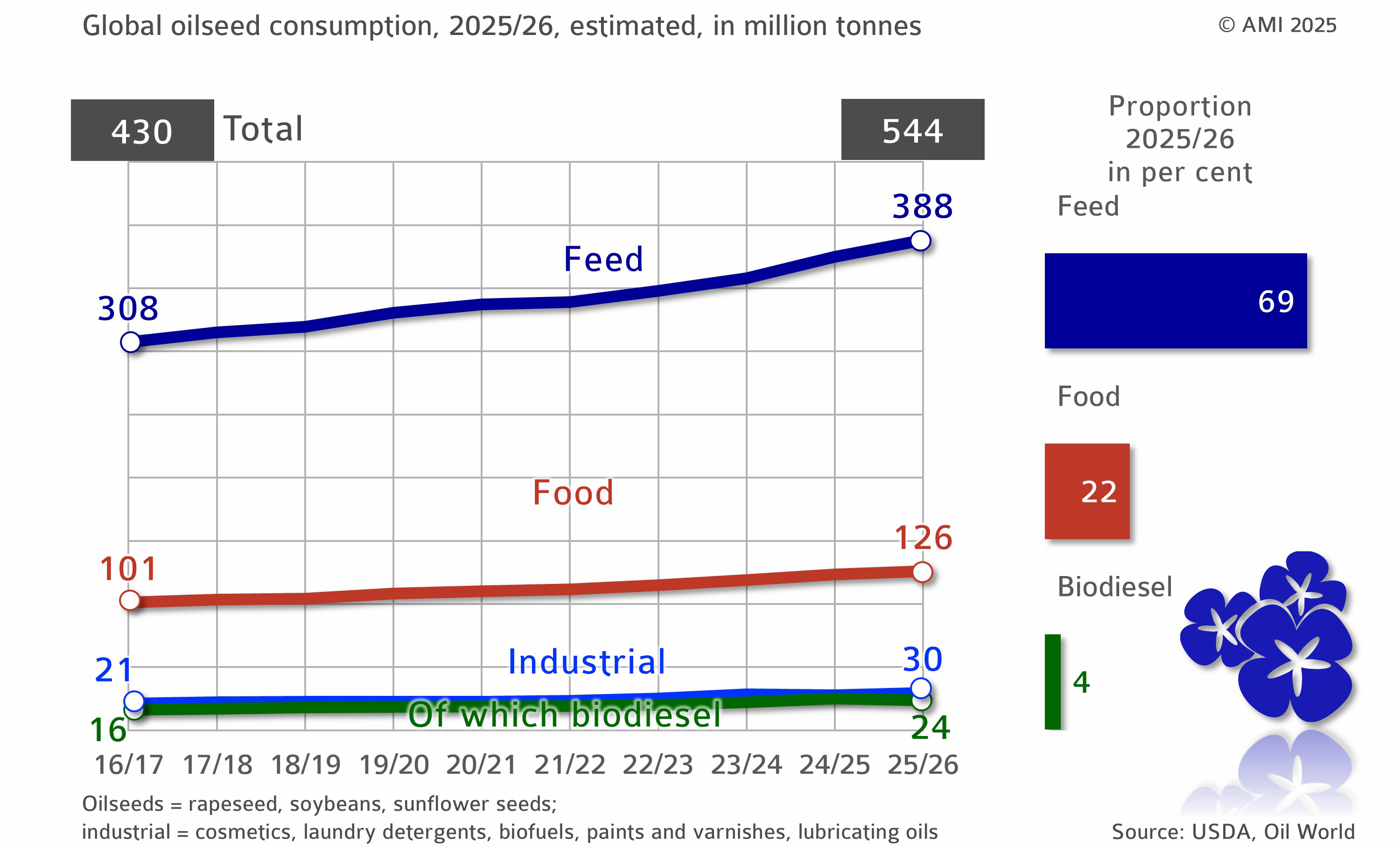
Oilseeds are used to make vegetable oil and extraction meal or oilseed cake, respectively. Vegetable oil can be obtained by various chemical and physical methods. Before being pressed, the feedstock is heated to increase oil yield. The meal that remains after pressing is used as a high-protein feed. Accordingly, most oilseed products used worldwide in 2025/26 are intended for feeding purposes. Feed uses account for approximately 69 per cent, food uses for 22 per cent, and about 5 per cent are used for industrial purposes, of which 4 per cent is for biodiesel.
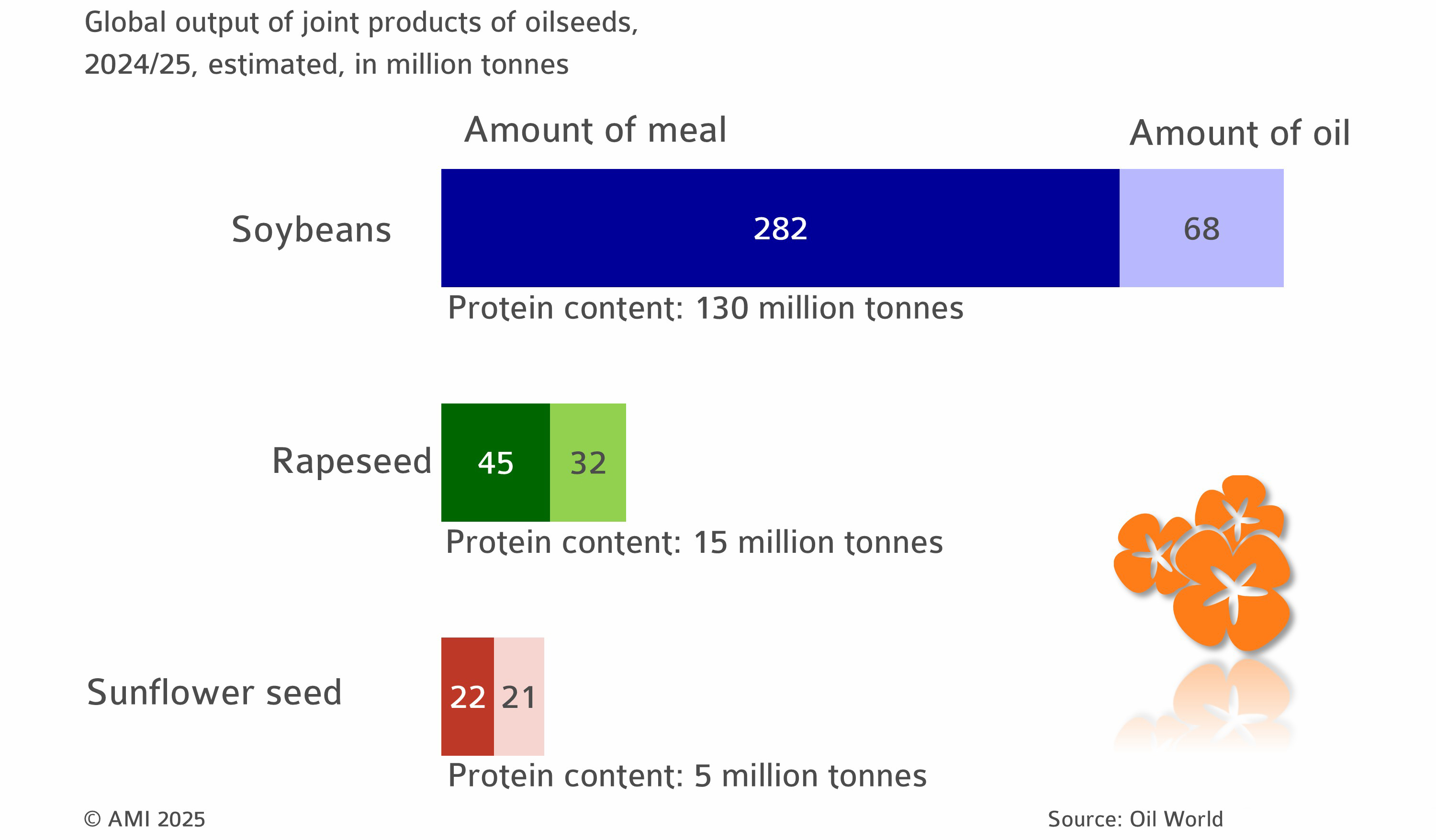
The oilseed meal market is dominated by soybean meal, with global production totalling around 280–290 million tonnes, ahead of rapeseed meal (around 50 million tonnes) and sunflower meal (just over 20 million tonnes). Farmers in the EU-27 only produce GM-free rapeseed. Consequently, rapeseed is by far the most important GM-free source of protein for animal feeding in the European Union, particularly in dairy production (declaration “without GM”). EU rapeseed meal therefore reduces the need for soybean imports and the acreage of land that would otherwise be required for soy cultivation. Unfortunately, this fact is still not fully appreciated by the EU Commission, whether with respect to incorporating the protein component in greenhouse gas accounting for rapeseed-based biodiesel or in the “Farm to Fork” and European protein strategies.
Majority of oilseed products go into feed
1.5.1.1 Global production of oils and meals
Practical dual use of oilseeds
Headerbild: jorisvo – stock.adobe.com