4.1.1 Shares of land used for biofuel production
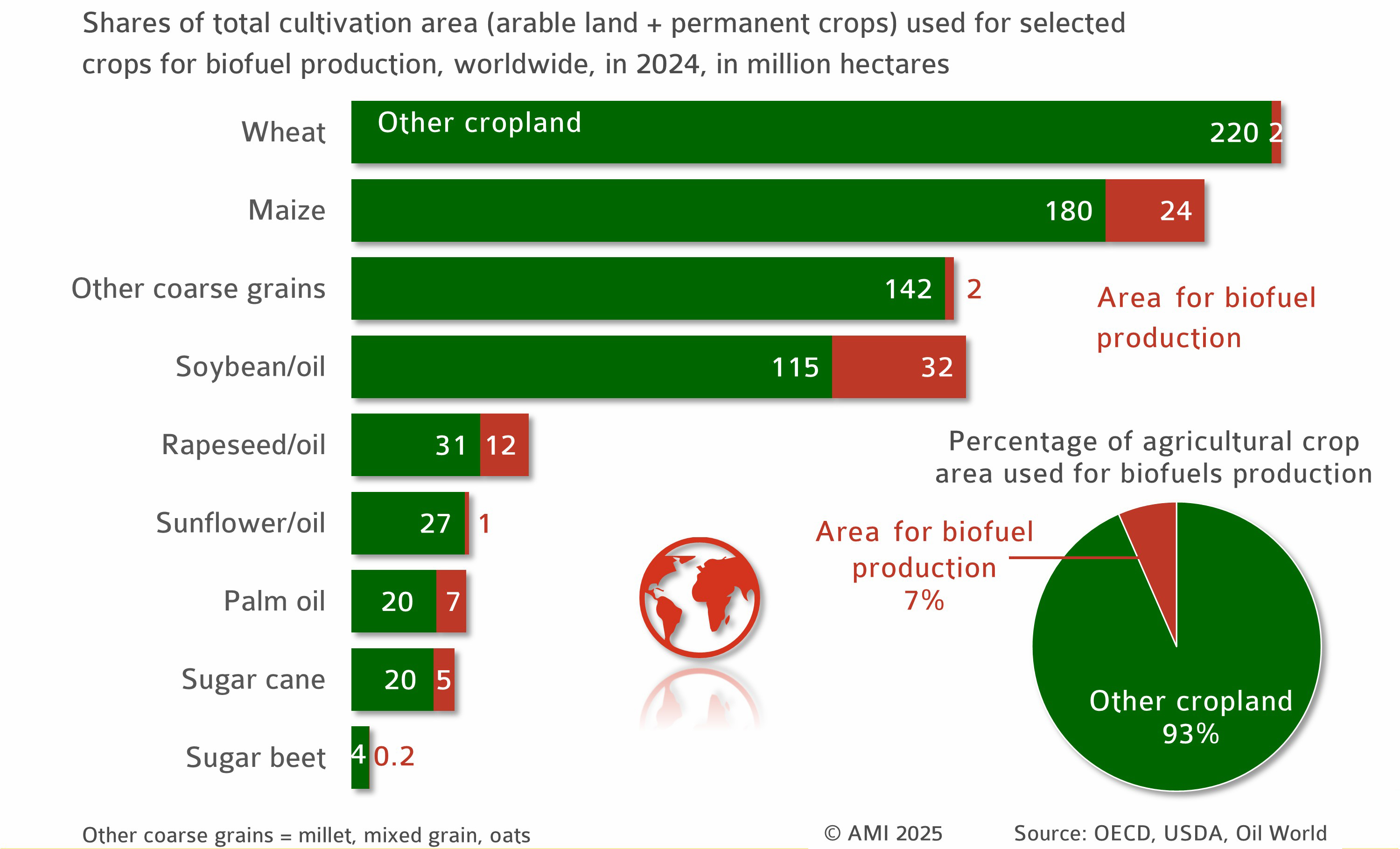
Crop plants were grown on more than 1.2 billion hectares worldwide in 2024. These include grain, oilseeds, protein, sugar and fibre plants, as well as fruits, vegetables, and nuts. The largest share was used directly or indirectly, via livestock feed, for human nutrition. Feedstocks for biofuel production accounted for only about 7 per cent of the cultivation area.
Most feedstock for use in biofuel production is grown in regions with a structural feedstock surplus, especially crops such as maize, soybeans and palm oil. In other words, processing them into biofuels helps reduce surpluses and generates additional value added. At the same time, the need for imports of crude oil or fossil fuels declines in many countries – a relevant factor particularly in poorer countries.
Another effect of biofuel production is that it also yields high-quality protein feedstuffs, which are in high demand. The associated value added is a promising option to improve the cost effectiveness of feedstock production, especially in times of increasing development and marketing of vegetable proteins from soybeans and rapeseed for human consumption. Furthermore, the production of joint products reduces the overall amount of land dedicated exclusively to food production. In other words, biofuels derived from certified sustainable feedstock are not responsible for rising commodity prices. What is more, these feedstocks can be diverted to food use if and when needed - as was clearly observed during the Ukraine crisis, when sunflower oil on supermarket shelves was swapped for rapeseed oil.
Biofuels take up little space