2.3.1 Resource bases for biodiesel and HVO in the EU-27
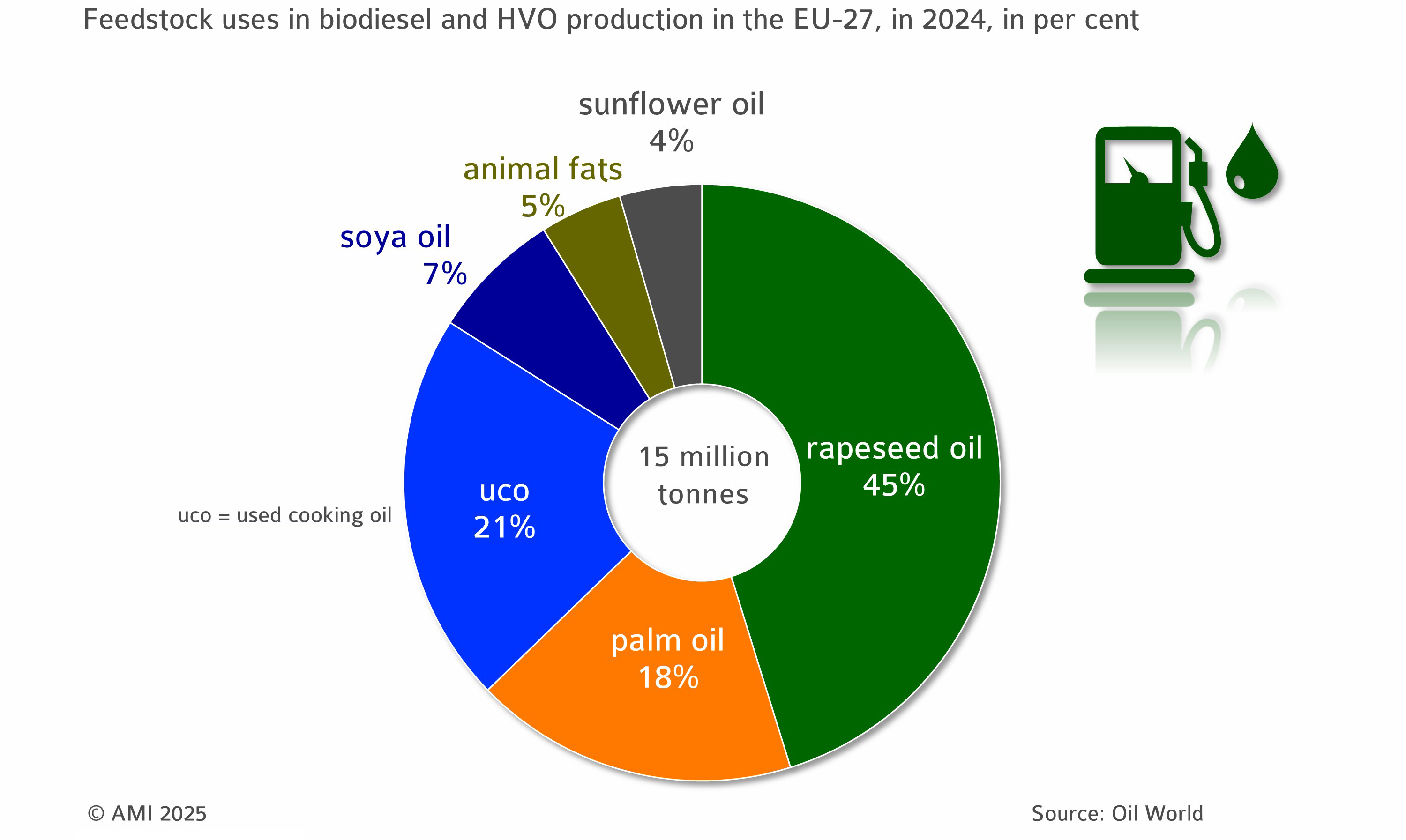
Availability and price determine the use of vegetable and animal oils and fats in biofuels. Rapeseed oil remains the most important feedstock in the EU, accounting for 45 per cent of production. Total production of biodiesel and HVO decreased 2.8 per cent in 2024 compared with 2023, falling to 15 million tonnes. The share of rapeseed oil in biodiesel production increased. The share of used cooking oil also increased somewhat, reaching 21 per cent in 2024. The share of biofuels derived from palm oil fell to 18 per cent in 2024 after they were excluded from being credited towards national quota obligations in some member states (France, Germany and others).
Concurrently, the EU, and Germany in particular, are politically promoting the use of renewable and alternative transport fuels – for example through fixed quotas for biokerosene or other renewable energy sources (such as synthetic fuels, including H2 or e-fuels). The revised Renewable Energy Directive (2023/2413 – RED III) sets ambitious targets for member states. By 2030, member states are required to reduce greenhouse gas (GHG) emissions in the transport sector by at least 14.5 per cent, or to increase the share of renewable energy to a minimum of 29 per cent in road and rail transport. In addition, a sub-target applies throughout the EU: the combined share of advanced biofuels and renewable non-biogenic transport fuels should reach a minimum of 5.5 per cent by 2030, of which at least 1 per cent must be in the form of Renewable Fuels of Non-Biological Origin (RFNBOs, power-based fuels).
However, it should be noted that the statistical basis for commodity shares varies significantly depending on the source used. This means that official statistics from the European Commission need to be improved and updated. A functioning EU database would provide the EU Commission with the required information.
Rapeseed oil share continues to rise