4.3.1 Land required for soybeans if German biodiesel production did not exist
Rapeseed meal remains a crucial element in supplying protein for German animal husbandry, in particular dairy cattle feeding. It is produced GM-free in Europe and has largely replaced soybean meal in cattle and dairy feeds. Alongside its favourable feed value, a major advantage is its regional production at 13 oil mill sites in Germany, ensuring short distances and high security of supply.
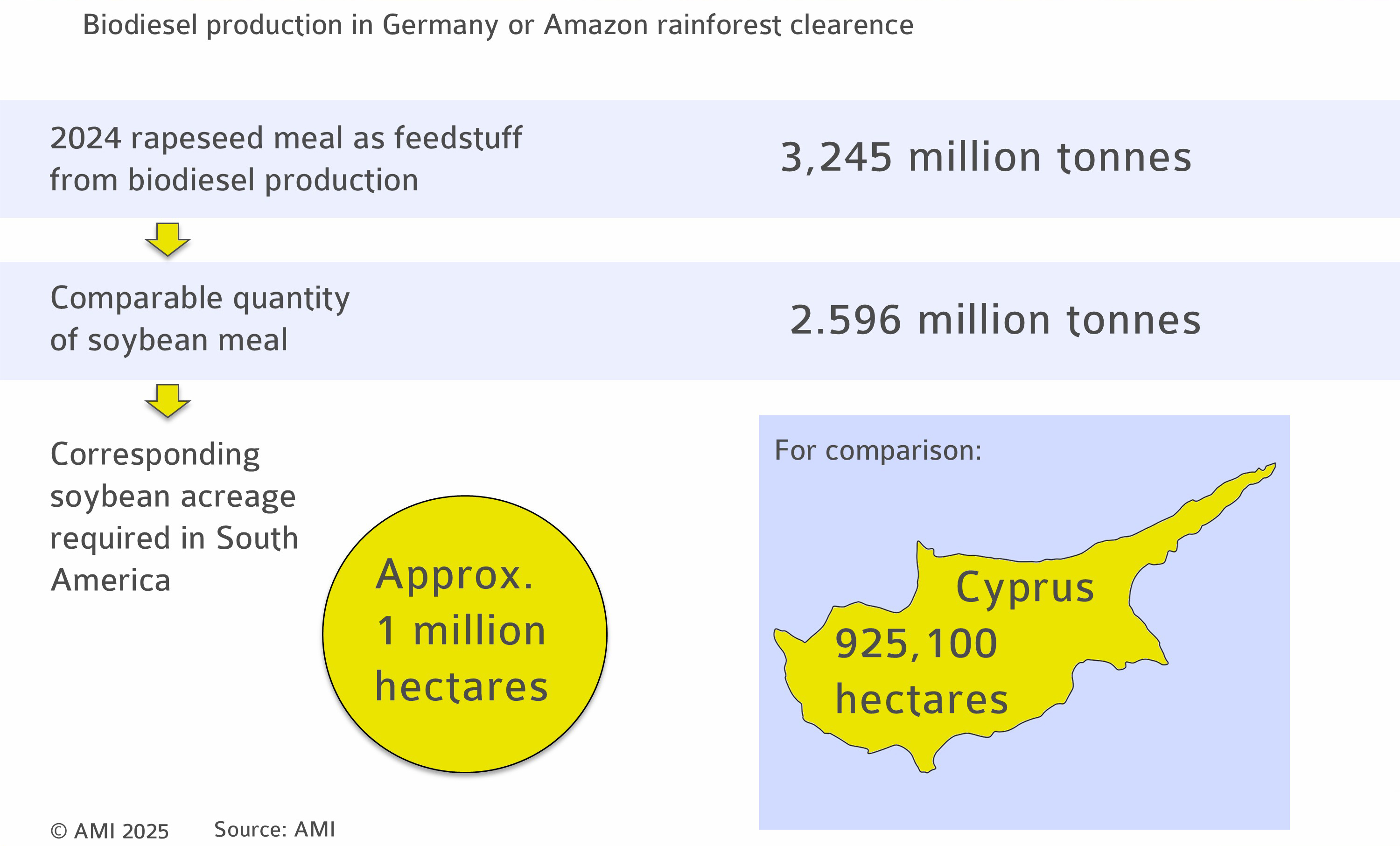
The production of biodiesel is a key factor driving this supply. Just over 3 million tonnes of rapeseed meal were generated as a joint product in Germany in 2024. If demand for rapeseed oil for biofuels were to be reduced due to political decisions, domestic supply of rapeseed meal would decline accordingly. However, the latter is urgently needed, as Germany's annual demand for oilseed meals amounts to 7.5 to 8 million tonnes. With no demand from biodiesel producers, there would be a shortage of nearly 2.6 million tonnes of soybean meal equivalents that would have to be imported. This would represent an additional soybean area of approximately 1 million hectares in South America – an area roughly the size of Cyprus. This pressure on land increases the risk of further deforestation in ecologically sensitive regions.
The European Regulation on deforestation-free supply chains (EUDR) attempts to counteract this development. The regulation underscores the urgent need to take action to prevent additional changes in land use in third countries and to protect biotopes that are crucial in the mitigation of global climate change.
Biodiesel or deforestation