
4.2.1 Global use of palm oil
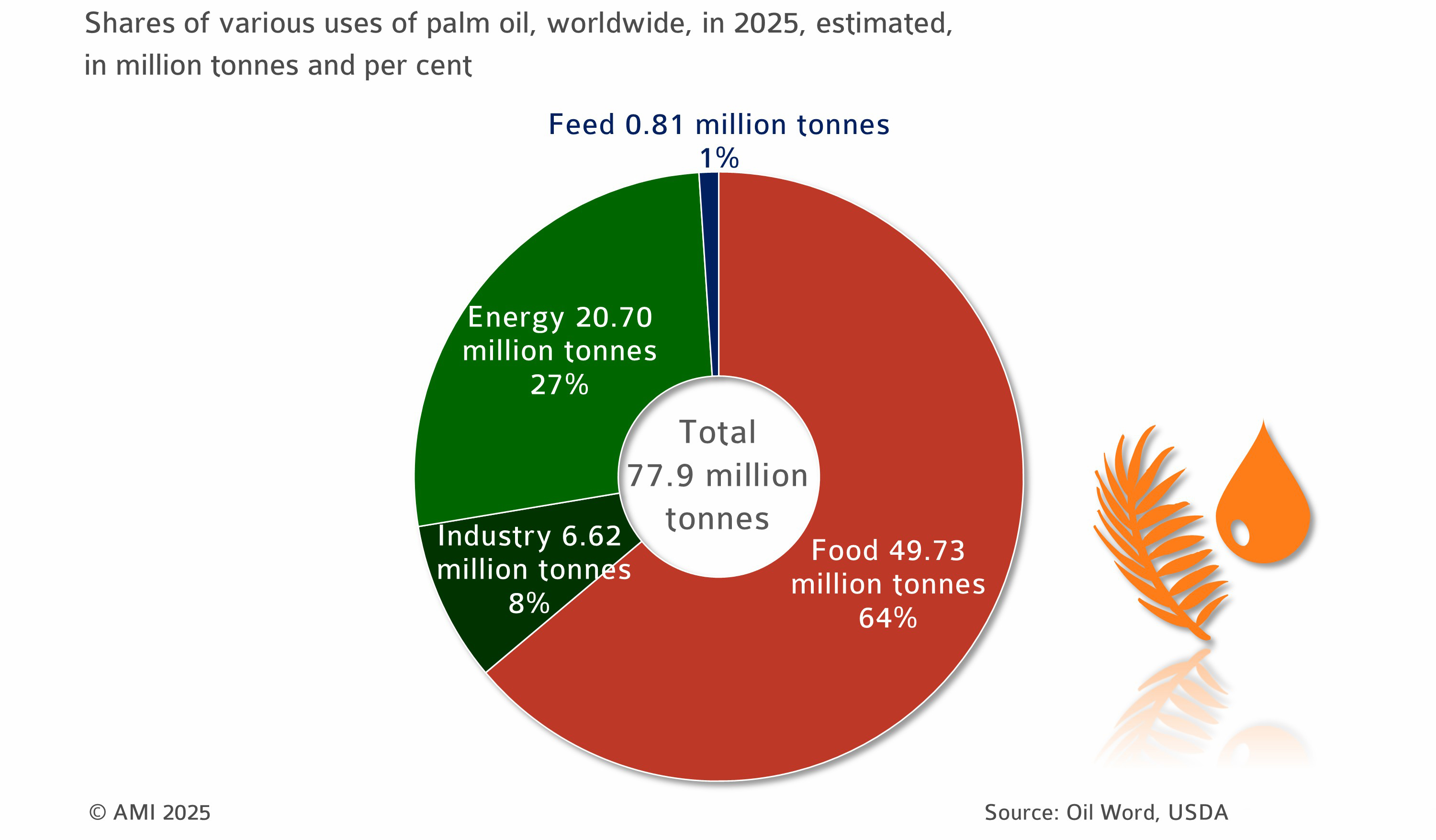
Oil palm is the single most important oleaginous fruit crop in Southeast Asia, but it is also grown to a considerable extent in Colombia and Nigeria. Palm oil is the most important vegetable oil in the world, with annual production reaching around 80 million tonnes. Like other vegetable oils, palm oil has a wide range of uses: in 2025, food uses accounted for 64 per cent, the power sector (biofuels) for 27 per cent, industrial applications for 8 per cent and feed for 1 per cent. Global consumption of palm oil totalled approximately 77.9 million tonnes in 2025, most of which comprised edible oils used in Asia.
Global palm oil production continues to increase, first and foremost due to expansions in production area and advances in yield. Demand grows at a slower pace, which means that extra volumes are used in biodiesel in the major palm oil-producing countries. Indonesia is gradually raising its blending mandate, and is planning to implement its B50 biodiesel programme in 2026.
In the EU, on the other hand, the use of palm oil for biofuels is being reduced. Biofuels derived from this feedstock (biodiesel/HVO) can no longer be counted towards quota obligations from 2030 onwards. The reason is that palm oil is considered to entail a high risk of indirect changes in land use due to its use in transport fuels (iLUC risk). Notwithstanding the evident decline in the EU market, global palm oil consumption is expected to rise, mainly driven by food uses.
Palm oil is primarily food
Headerbild: jorisvo – stock.adobe.com