3.1.1 Output of rapeseed meal with and without biodiesel fuel production
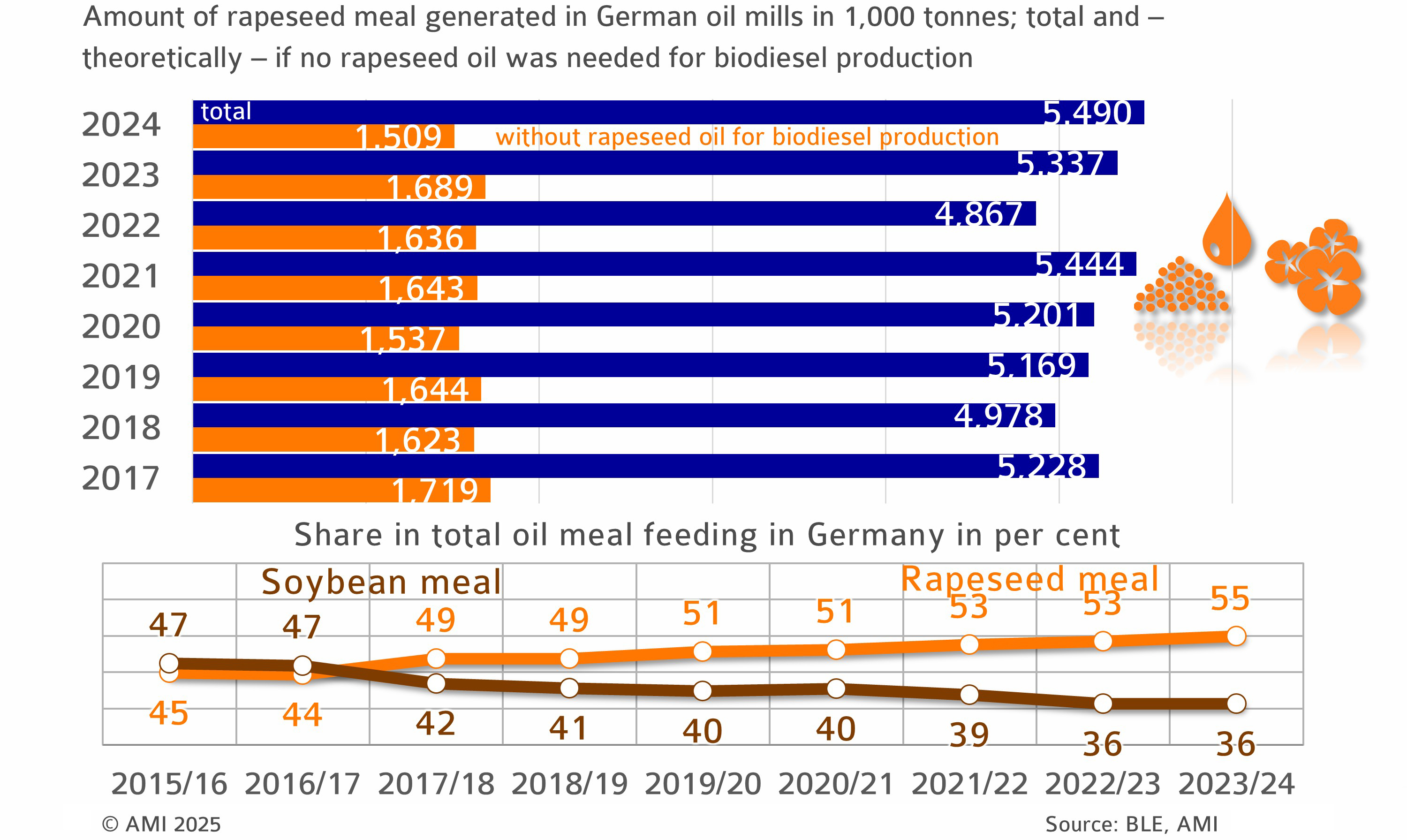
The feed market benefits significantly from biodiesel production, because rapeseed meal is generated as a by-product of rapeseed oil production. In 2024, German oil mills processed just under 9.8 million tonnes of rapeseed, yielding 4.3 million tonnes of rapeseed oil and 5.5 million tonnes of rapeseed meal. Rapeseed varieties in Europe are exclusively bred without genetic modification (GM) and only licensed if developed without GM, which means that the byproduct rapeseed meal is also GM-free. This fact encourages the use of rapeseed meal, especially in dairy feed, where it can fully replace soybean meal. The key factor is demand for dairy products that qualify as “without GM”. This demand encourages regional production and processing of rapeseed. At the same time, it reduces reliance on imports of soya and soybean meal.
Any reduction in the production of biodiesel would have an immediate impact on protein supply. If the energy crop component were to be eliminated, most of the currently available rapeseed meal would disappear. Additional soybean meal imports would be required to close the gap – with corresponding implications for import dependency and the sustainability balance.
Rapeseed meal has accounted for around half of Germany's oil meal use for years. In 2023/24, its share reached as much as 55 per cent, whereas soya meal stabilised at a low level. This underscores the growing role of rapeseed meal as the most important domestic source of protein in animal feed.
The important of rapeseed meal